Week Fourteen
Gauguin-nevermore


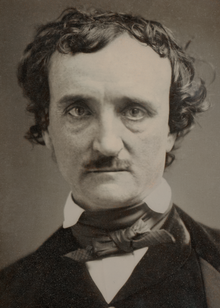
Edgar Allan Poe (/poʊ/; born Edgar Poe; January 19, 1809 – October 7, 1849) was an American writer, editor, and literary critic. Poe is best known for his poetry and short stories, particularly his tales of mystery and the macabre. He is widely regarded as a central figure of Romanticism in the United States and American literature as a whole, and he was one of the country's earliest practitioners of the short story. Poe is generally considered the inventor of the detective fiction genre and is further credited with contributing to the emerging genre of science fiction.He was the first well-known American writer to try to earn a living through writing alone, resulting in a financially difficult life and career.
The Baltimore Ravens are a professional American football team based in Baltimore, Maryland. The Ravens compete in theNational Football League (NFL) as a member club of the American Football Conference (AFC) North division. The team plays its home games at M&T Bank Stadium and is headquartered in Owings Mills.


"To Helen" is the first of two poems to carry that name written by Edgar Allan Poe. The 15-line poem was written in honor of Jane Stanard, the mother of a childhood friend. It was first published in 1831 collection Poems of Edgar A. Poe. It was then reprinted in 1836 in the Southern Literary Messenger.
Anne Boleyn was Queen of England from 1533 to 1536 as the second wife of King Henry VIII, and Marquess of Pembroke in her own right. Henry's marriage to Anne, and her subsequent execution bybeheading, made her a key figure in the political and religious upheaval that was the start of the English Reformation.

Irony (from Ancient Greek εἰρωνεία (eirōneía), meaning "dissimulation, feigned ignorance"), in its broadest sense, is a rhetorical device, literary technique, or event in which what appears, on the surface, to be the case, differs radically from what is actually the case. Irony may be divided into categories such as verbal, dramatic, and situational.
Verbal, dramatic, and situational irony are often used for emphasis in the assertion of a truth. The ironic form of simile, used in sarcasm, and some forms of litotes can emphasize one's meaning by the deliberate use of language which states the opposite of the truth, denies the contrary of the truth, or drastically and obviously understates a factual connection.
Other forms, as identified by historian Connop Thirlwall, include dialectic and practical irony.
In poetry, a stanza (/ˈstænzə/; from Italian stanza [ˈstantsa], "room") is a grouped set of lines within a poem, usually set off from other stanzas by a blank line or indentation. Stanzas can have regular rhyme and metrical schemes, though stanzas are not strictly required to have either. There are many unique forms of stanzas. Some stanzaic forms are simple, such as four-line quatrains. Other forms are more complex, such as the Spenserian stanza. Fixed verse poems, such as sestinas, can be defined by the number and form of their stanzas. The term stanza is similar tostrophe, though strophe is sometimes used to refer to irregular set of lines, as opposed to regular, rhymed stanzas.
The stanza in poetry is analogous with the paragraph that is seen in prose; related thoughts are grouped into units. In music, groups of lines are typically referred to as verses. The stanza has also been known by terms such as batch, fit, and stave.
"Dover Beach" is a lyric poem by the English poet Matthew Arnold. It was first published in 1867 in the collection New Poems, but surviving notes indicate its composition may have begun as early as 1849. The most likely date is 1851.
The title, locale and subject of the poem's descriptive opening lines is the shore of the English ferry port of Dover, Kent, facing Calais, France, at the Strait of Dover, the narrowest part (21 miles) of the English Channel, where Arnold honeymooned in 1851.
MLA=Modern Language Association
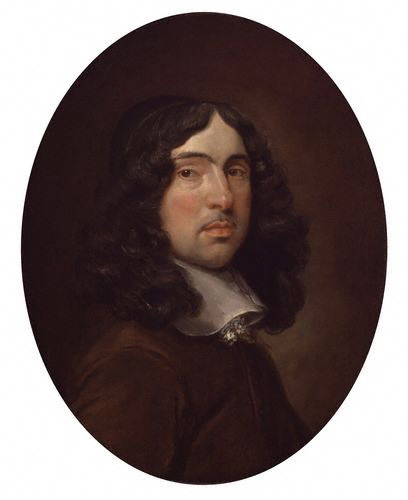
Andrew Marvell (/ˈmɑːrvəl/; 31 March 1621 – 16 August 1678) was an English metaphysical poet, satirist and politician who sat in the House of Commons at various times between 1659 and 1678. During the Commonwealth period he was a colleague and friend of John Milton. His poems range from the love-song "To His Coy Mistress", to evocations of an aristocratic country house and garden in "Upon Appleton House" and "The Garden", the political address "An Horatian Ode upon Cromwell's Return from Ireland", and the later personal and political satires "Flecknoe" and "The Character of Holland".
To the Virgins, to Make Much of Time
Related Poem Content Details
Gather ye rose-buds while ye may,
Old Time is still a-flying;
And this same flower that smiles today
Tomorrow will be dying.
The glorious lamp of heaven, the sun,
The higher he’s a-getting,
The sooner will his race be run,
And nearer he’s to setting.
That age is best which is the first,
When youth and blood are warmer;
But being spent, the worse, and worst
Times still succeed the former.
Then be not coy, but use your time,
And while ye may, go marry;
For having lost but once your prime,
You may forever tarry.

沒有留言:
張貼留言