Week Six
The American Dream is a national ethos of the United States, the set of ideals (Democracy, Rights, Liberty, Opportunity, and Equality) in which freedom includes the opportunity for prosperity and success, and an upward social mobility for the family and children, achieved through hard work in a society with few barriers. In the definition of the American Dream by James Truslow Adamsin 1931, "life should be better and richer and fuller for everyone, with opportunity for each according to ability or achievement" regardless of social class or circumstances of birth.
The American Dream is rooted in the Declaration of Independence, which proclaims that "all men are created equal" with the right to "Life, Liberty and the pursuit of Happiness."
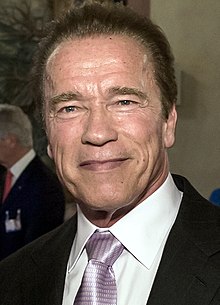
Arnold Alois Schwarzenegger is an Austrian-American actor, filmmaker, businessman, investor, author, philanthropist, activist, former professional bodybuilder and politician. He served two terms as the 38th Governor of California from 2003 until 2011.

San Francisco, officially the City and County of San Francisco, is the cultural, commercial, and financial center of Northern California and the only consolidated city-county in California. San Francisco encompasses a land area of about 46.9 square miles (121 km2) on the northern end of the San Francisco Peninsula, which makes it the smallest county in the state. It has a density of about 18,187 people per square mile (7,022 people per km2), making it the most densely settled large city (population greater than 200,000) in the state of California and the second-most densely populated major city in the United States after New York City. San Francisco is the fourth-most populous city in California, after Los Angeles, San Diegoand San Jose, and the 13th-most populous city in the United States—with a Census-estimated 2014 population of 852,469.The city and its surrounding areas are known as the San Francisco Bay Area, and are a part of the larger OMB designated San Jose-San Francisco-Oakland combined statistical area, the fifth most populous in the nation with an estimated population of 8.6 million.

The main systems of the human body are as follows:
- Cardiovascular/Circulatory system:
- Digestive system / Excretory system:
- Mechanical and chemical processes that provide nutrients via the mouth, esophagus, stomach and intestines.
- Eliminates waste from the body.
- Endocrine system:
- Provides chemical communications within the body using hormones.
- Integumentary system/ Exocrine system:
- Skin, hair, nails, sweat and other exocrine glands.
- Lymphatic system / Immune system:
- The system comprising a network of lymphatic vessels that carry a clear fluid called lymph.
- Defends the body against disease-causing agents.
- Muscular system/Skeletal system:
- Nervous system:
- Renal system / Urinary system:
- The system where the kidneys filter blood.
- Reproductive system:
- The sex organs required for the production of offspring.
- Respiratory system:


To Kill a Mockingbird is a 1962 American drama film directed by Robert Mulligan. The screenplay by Horton Foote is based onHarper Lee's 1960 Pulitzer Prize-winning novel of the same name. It stars Gregory Peck as Atticus Finch and Mary Badham as Scout.
The film, considered to be one of the best ever made, received overwhelmingly positive reviews from critics. A box office success, it earned more than 10 times its budget. The film won three Academy Awards, including Best Actor for Peck, and was nominated for eight, including Best Picture.
In 1995, the film was listed in the National Film Registry. It also ranks twenty-fifth on the American Film Institute's 10th anniversarylist of the greatest American movies of all time. In 2003, AFI named Atticus Finch the greatest movie hero of the 20th century.

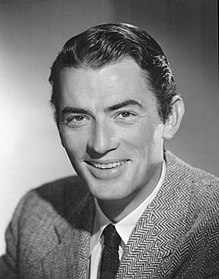
Eldred Gregory Peck (April 5, 1916 – June 12, 2003) was an American actor who was one of the most popular film stars from the 1940s to the 1960s. Peck continued to play major film roles until the late 1970s. His performance as Atticus Finch in the 1962 film To Kill a Mockingbird earned him the Academy Award for Best Actor. He had also been nominated for an Oscar for the same category for The Keys of the Kingdom (1944), The Yearling (1946), Gentleman's Agreement (1947) and Twelve O'Clock High (1949). Other notable films he appeared in include Spellbound (1945), The Paradine Case (1947), Roman Holiday (1953), Moby Dick (1956, and its 1998 miniseries), The Guns of Navarone (1961), Cape Fear (1962, and its 1991 remake), How the West Was Won (1962), The Omen (1976) and The Boys from Brazil (1978).
President Lyndon Johnson honored Peck with the Presidential Medal of Freedom in 1969 for his lifetime humanitarian efforts. In 1999, the American Film Institute named Peck among Greatest Male Stars of Classic Hollywood cinema, ranking at No. 12. He was named to the International Best Dressed List Hall of Fame in 1983.
"A Rose for Emily" is a short story by American author William Faulkner first published in April 30, 1930 issue of The Forum. The story takes place in Faulkner's fictional city, Jefferson, Mississippi, in the fictional county of Yoknapatawpha County. It was Faulkner's first short story published in a national magazine.

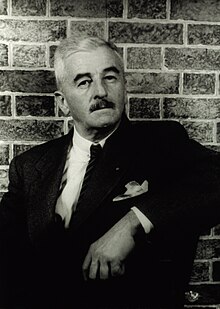
William Cuthbert Faulkner was an American writer and Nobel Prize laureate fromOxford, Mississippi. Faulkner wrote novels, short stories, a play, poetry, essays, and screenplays. He is primarily known for his novels and short stories set in the fictional Yoknapatawpha County, based on Lafayette County, Mississippi, where he spent most of his life. Faulkner is one of the most celebrated writers in American literature generally and Southern literature specifically.
Irony, in its broadest sense, is a rhetorical device, literary technique, or event in which what appears, on the surface, to be the case, differs radically from what is actually the case. Irony may be divided into categories such as verbal, dramatic, and situational.
vocabulary -
- ann - year e.g. anniversary

沒有留言:
張貼留言